Same Molecule, Different Price Tag: What American Men Should Know Before Switching to Generic Finasteride
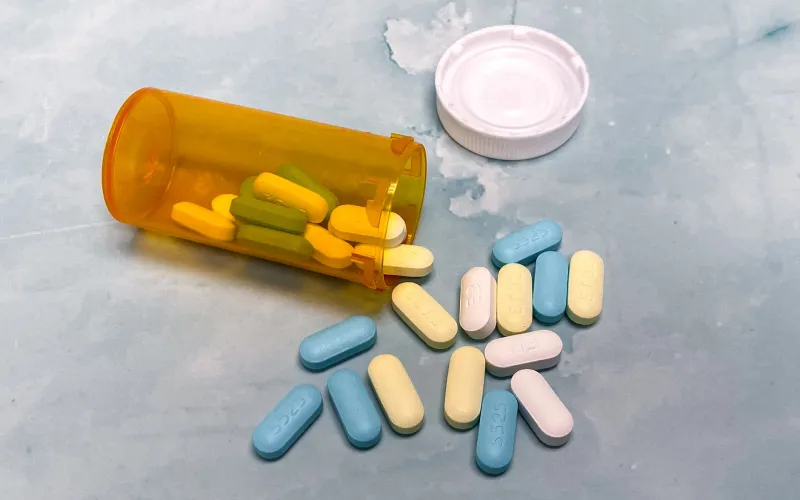
For many American men managing androgenetic alopecia, the monthly cost of brand-name Propecia has long been a point of frustration. At retail prices that can exceed $80 to $100 per month without insurance, it is no surprise that generic finasteride—often available for under $20 at major pharmacy chains—has become the dominant choice. But cost savings alone rarely tell the full story. The more important question is whether the cheaper version actually performs identically when it matters most: on your scalp.
What "Generic" Actually Means Under Federal Law
The term "generic" is frequently misunderstood. In the United States, the Food and Drug Administration (FDA) requires that a generic drug demonstrate bioequivalence to its brand-name counterpart before receiving approval. Bioequivalence means that the generic version must deliver the same active ingredient—in this case, finasteride 1 mg—into the bloodstream at a rate and extent that falls within an acceptable range of the original formulation.
The FDA's standard for bioequivalence defines this range as 80 to 125 percent of the reference drug's pharmacokinetic parameters, specifically the area under the curve (AUC) and the maximum concentration (Cmax). Critics of this standard sometimes point out that a drug performing at 80 percent bioavailability is technically compliant, yet meaningfully different in practice. Defenders of the system counter that real-world studies show most approved generics cluster far closer to 100 percent than the outer boundaries of that range suggest.
For finasteride specifically, multiple manufacturers have received FDA approval for their 1 mg tablets, meaning each has passed the agency's bioequivalence threshold. This is not a regulatory shortcut—it is the same process that governs generics across virtually every drug category in the country.
Where Manufacturing Differences Can Enter the Picture
Active ingredient aside, a tablet is far more than its primary compound. Inactive ingredients—known as excipients—include binders, fillers, coatings, and disintegrants that affect how quickly a tablet dissolves, how uniformly the active ingredient is distributed throughout the pill, and how stable the medication remains over time.
Different manufacturers use different excipient combinations, and while these components are not supposed to alter the drug's therapeutic effect, individual responses can vary. A small subset of men report noticing differences in tolerability or minor side effect profiles after switching between manufacturers, even when the active ingredient remains constant at 1 mg. Whether these reports reflect genuine pharmacological differences or a nocebo effect—where expectations of change produce perceived change—is difficult to establish definitively without controlled study data.
What is worth noting is that major generic manufacturers supplying American pharmacies, including companies like Aurobindo, Cipla, and Dr. Reddy's Laboratories, operate under FDA oversight and are subject to Current Good Manufacturing Practice (cGMP) regulations. Facilities that produce drugs for the U.S. market are inspected, and products that fail quality standards can be recalled. This regulatory framework provides meaningful—though not absolute—assurance of consistency.
The Real-World Experience of American Men Who Have Switched
Anecdotal evidence from online communities frequented by men treating hair loss reveals a spectrum of experiences. A significant majority of men who transitioned from Propecia to a generic formulation report no perceptible difference in efficacy or side effects. Their hair stabilization continued, and their monthly costs dropped substantially.
A smaller but vocal minority describe noticing changes after switching—whether a perceived uptick in shedding, altered side effect intensity, or simply a psychological unease about abandoning a brand they associated with predictable results. Importantly, dermatologists and pharmacologists tend to attribute most of these differences to manufacturer-to-manufacturer variation in excipients or to the psychological weight of changing a routine, rather than to any fundamental difference in finasteride's mechanism of action.
The drug itself inhibits the enzyme 5-alpha reductase, which converts testosterone into dihydrotestosterone (DHT). DHT is the primary driver of follicle miniaturization in men genetically predisposed to male pattern baldness. Whether that enzyme encounters finasteride from a Propecia tablet or a generic equivalent, the molecular interaction is chemically identical.
How to Make the Transition Thoughtfully
For men currently taking brand-name Propecia who are considering a switch, a few practical steps can help ensure continuity of care.
Consult your prescribing physician or dermatologist. Before making any change, discuss the transition with the provider who manages your hair loss treatment. They can document your current status—including any photographic baseline—so that any future changes in your hair density can be assessed objectively rather than anecdotally.
Request consistency from your pharmacy. Pharmacies often source generics from multiple manufacturers depending on supply and pricing agreements. If you find a generic formulation that works well for you, ask your pharmacist to note your preference for a specific manufacturer. Many pharmacies can accommodate this request, though it is not always guaranteed.
Allow adequate time before drawing conclusions. Finasteride's effects—both positive and negative—operate on a slow timeline. Meaningful assessment of efficacy requires at least six to twelve months of consistent use. Switching formulations and expecting to evaluate results within weeks is not a reliable methodology.
Monitor side effects without fixation. The known side effect profile of finasteride—which can include decreased libido, ejaculatory changes, and in rare cases, mood-related effects—applies to all formulations. If you experience new or worsening symptoms after switching, report them to your physician promptly rather than discontinuing without guidance.
The Financial Calculus Is Difficult to Ignore
For a medication that most men will take for years, or potentially decades, the cumulative cost difference between brand-name and generic finasteride is substantial. At a conservative estimate, choosing a generic could save an American man anywhere from $700 to $1,000 or more annually. Over a ten-year treatment course, that figure becomes significant enough to influence decisions about treatment adherence—and adherence, ultimately, is what determines long-term outcomes.
A man who takes brand-name Propecia inconsistently because of cost pressure is likely to fare worse than one who takes a generic reliably every day. From a clinical standpoint, consistency of dosing is one of the most important variables in finasteride's effectiveness.
The Bottom Line
The science supports generic finasteride as a legitimate, FDA-regulated alternative to brand-name Propecia for the vast majority of American men. The active compound is identical, the bioequivalence standard is enforceable, and the manufacturing oversight—while imperfect—provides meaningful quality assurance.
That said, the decision to switch is not one to make carelessly. Documenting your baseline, communicating with your physician, and monitoring your response systematically are steps that protect both your health and your ability to make informed judgments. For most men, the generic represents a sound, evidence-consistent choice. For a small subset, individual variability in response to different excipient profiles may warrant staying with a formulation they know works for them—regardless of cost.
In the end, the molecule is the same. The savings are real. And the decision, like most in medicine, is best made with accurate information rather than assumption.